
As a growing game designer working with teams on different projects, project management has become a topic of interest as of late. In fact, as I am just beginning my work on a new game, it has become the forefront of our time to make sure we get our game organized. I have used Trello many times before, as its convenience and handy power-ups allow a clear image of what is being worked on and who is working on that part. So, I would like to show what our project management looks like as we begin work on the game proper and leave the preliminary stages of our project.
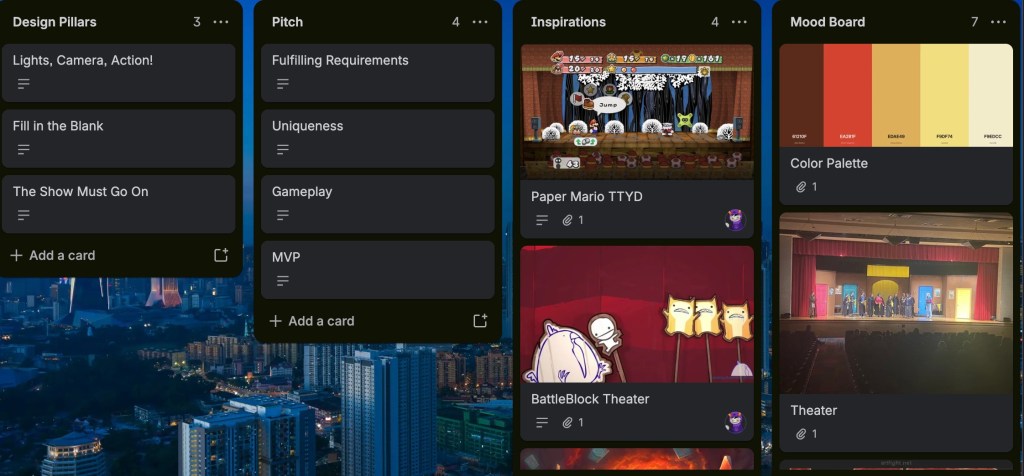
Similar things to other projects are present on our project management software, such as defined roles and links to other applications. Our external links include a design document, tailored to the design of our game. Additionally, links to our Github (stored files for our game) and a recent build of our game are available as well. We also have much of our initial brainstorming and research on the Trello as well, including our pitch and inspirations.
However, there are a few standout blocks for a game designer that are important to the project. While much of this is also in our design document, we have our design pillars listed on our Trello board. These are defining pillars that are driving every decision we make for our game, and we want to abide by them to the best of our ability. Every other block on our board was made to justify and apply these design pillars throughout the project.
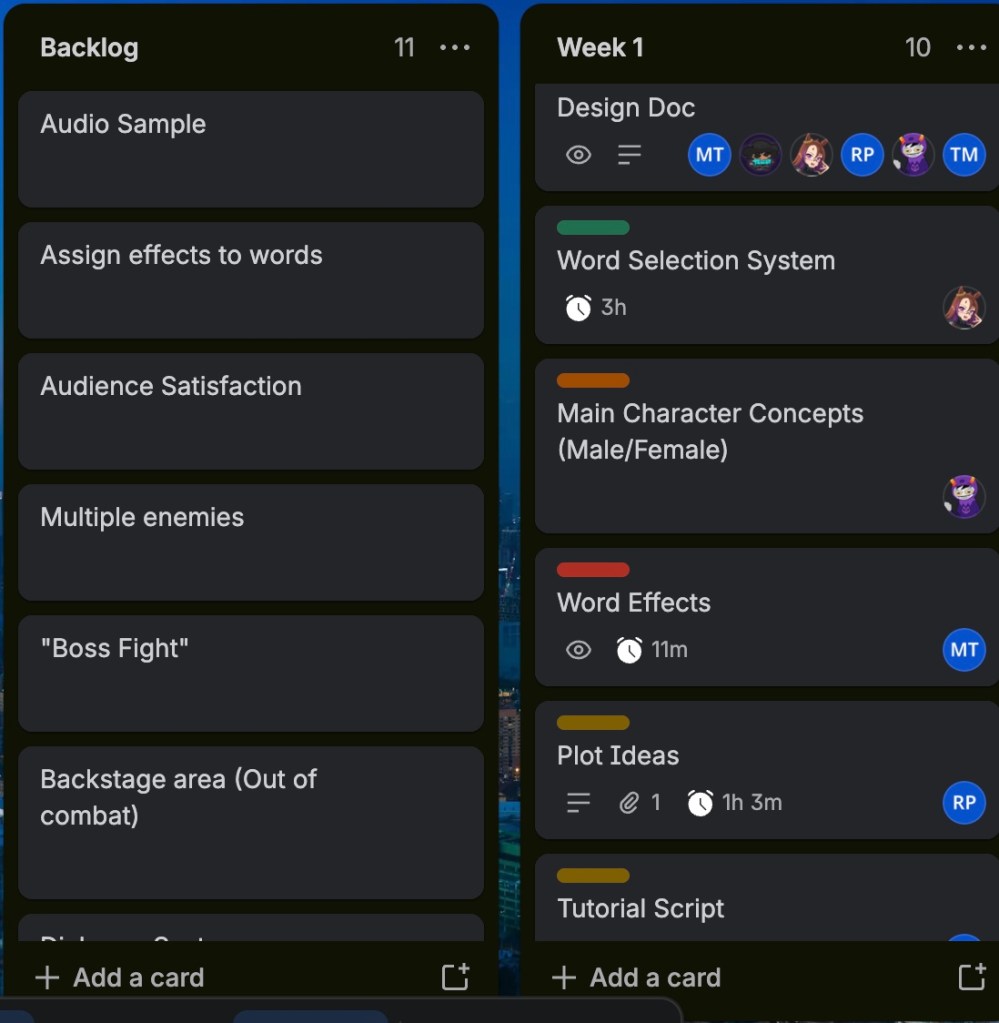
Our task list is split up into two sections; our weekly tasks and our backlog. Starting this week, we would fill up the backlog with tasks that need to be done for the project as a whole and pull them from that block into our week tasks. We additionally organized these tasks into our different roles, from design to art to writing and to programming, and gave each person their tag so they know that is their assignment for the week. As the team lead for this project, I am overseeing these tasks to see how they work out, alongside our scrum master. Power-ups such as a time tracker allow us to see visible progress, and will keep ourselves organized as the project goes on.
I believe that organization is a huge reason to why projects are able to succeed or fail. Many of my past projects have felt rushed or not clear without guidelines like this. Learning of an Agile workflow has allowed this year’s project to be the most organized I’ve had yet, thanks to Trello. I feel that I know what will happen each week, and can expand or reduce the amount of work assigned should the need arise. Personally, it also helps me visualize how things will go in the end, especially with everyone’s tasks laid out in a clear format using the blocks and tags. Management is a big task in the gaming industry, and this allows me a chance to work with these project management tools on a much smaller scale than a company would provide.


 Save Point
Leave a comment